
Reading Time: 7 min
Introduction
Every step in Assisted Reproductive Technologies (ART), such as IVF (In Vitro Fertilisation), possesses its own intrinsic significance towards successful pregnancy. It can be stressful to figure out the do’s and don’ts during each procedure in order to achieve a successful pregnancy.
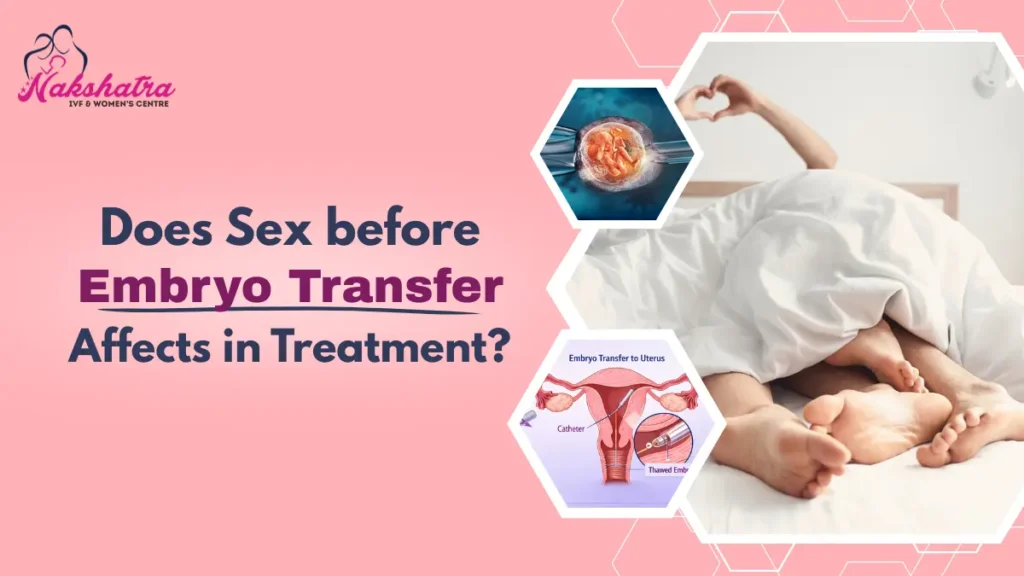
Most couples may wonder if having sex while undergoing these procedures is safe or not. Having sex before embryo transfer has been investigated among animal and human models by several researchers, and findings depict that having sex the night before embryo transfer can assist in successful implantation and increase the success rate.
Hold on—there’s a whole lot more to dive into, and this blog breaks it down for you.
What is Embryo Transfer?
Embryo transfer is the final procedure in the IVF process. The ovaries are stimulated to produce healthy eggs using fertility medications, which are then removed from the ovaries and fertilized in vitro (outside the body or in a lab) with their partner’s sperm. After successful fertilisation, the embryo or the fertilised eggs are transferred back into the uterus to attach to the uterine wall.
Factors Influencing Embryo Transfer
The success rate of the IVF process can be increased by 30% when the correct embryo transfer technique is used. The embryo is implanted in the maximum implantation site (MIP) of the uterus, where the maximum receptivity occurs. This step is done with utmost care to prevent any bleeding and disruption of the endometrium, triggering of uterine contractions, or any other trauma. The type of catheter used during this process should also be monitored to prevent adverse outcomes.
Other factors like the patient’s clinical status, uterine environment, endometrial preparation, quality of the sperm, genetic factors, lifestyle, and the expertise of the clinician determine the success of this procedure. Hence, it is of paramount importance to ensure the factors that influence a successful IVF are monitored.
Sex and Embryo Transfer: What Does Research Say?
There are varying opinions on the impact of having sex before embryo transfer. According to Hou, J. W. et al., sexual intercourse using a barrier contraception like condoms, the night before frozen-thawed embryo transfer, may catalyse beneficial outcomes. In this study, patients who had sex the night before embryo transfer had higher clinical pregnancy rate (51.72%) and implantation rate (38.31%) compared to the group that did not have sex. The possible effect of this may be due to the increased flow of blood in the female genital region due to intercourse. The limitation of this study was the frequency and timing of restricting sex to only a single time, the night before embryo transfer.
Evidence also states that when the woman’s vaginal tissues come in contact with their partner’s semen, there are favourable pregnancy outcomes. Some studies performed on animal models have also revealed that the contact of the female reproductive tract with either the ejaculate’s fluid components or seminal plasma supports successful implantation of the embryo and its development.
Research findings also indicate that certain components in the semen may help in eliciting an immune response in the woman that may enhance endometrial receptivity and pregnancy outcomes.
Having sex the night before embryo transfer can also help in improving mood and reducing stress. The IVF process can be emotionally exhausting, and sex can help in releasing endorphins, thereby reducing anxiety and stress.
Sex, being a natural booster of the love hormone, oxytocin, helps in improving the blood flow to the uterus, thereby enhancing the uterine environment for successful implantation. There is no one-size-fits-all approach in fertility treatments, and there is a need for more research to understand the science behind this. It is always recommended to ask your doctor about having sex during the IVF procedure.
Reasons Your Doctor May Advise Pelvic Rest Before Embryo Transfer
Although studies depict positive impacts of having sex the night before embryo transfer, some doctors do not suggest the same. Certain evidence states that having sex without contraception before frozen-thawed embryo transfer can increase the risk of complications like heterotopic pregnancy. Other possible side effects of having sex before embryo transfer may include,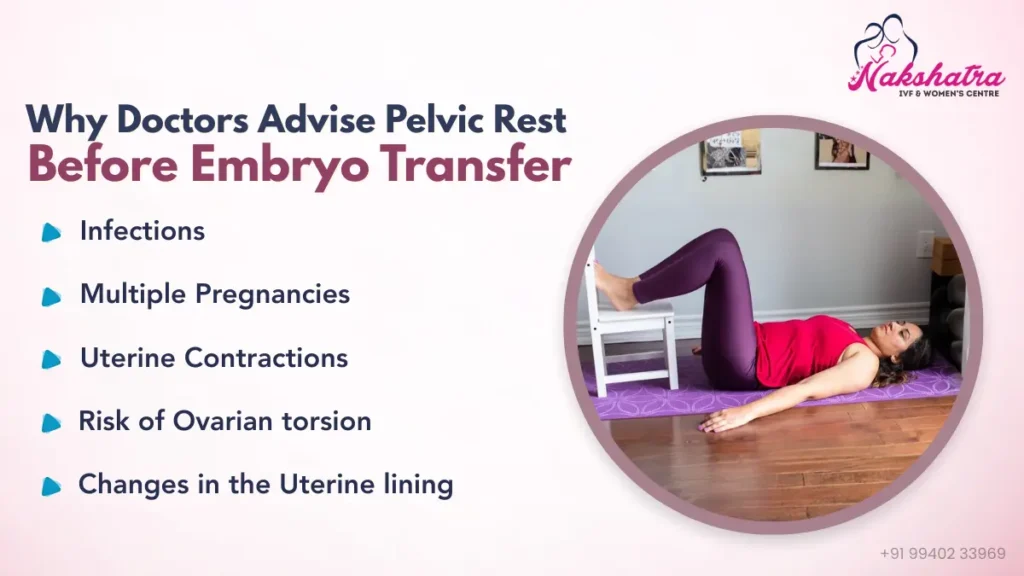
- Infections: The medications taken during IVF treatment make the uterus and cervix region highly sensitive. The risk of the vagina being exposed to microorganisms increases during sexual intercourse, thereby heightening the risk for infections.
- Multiple pregnancies: Although rare, it is possible for multiple pregnancies to happen due to unprotected sex before embryo transfer.
- Uterine contractions: While generally the uterine contractions following sex can be harmless, the sensitivity of the uterus due to medications could potentially impact the implantation of the embryo.
- Risk of ovarian torsion: When the ovaries are being stimulated during the IVF procedure, having sex may lead to swollen and painful ovaries, thereby leading to ovarian hyperstimulation syndrome or ovarian torsion.
- Changes in the uterine lining: Protecting the uterine environment is crucial to support successful implantation and development of the embryo. Sometimes vaginal intercourse may affect the uterus lining and affect the result of the transfer procedure.
- Other potential disadvantages may include hormonal changes and pain during sex.
General Guidelines on Intimacy and IVF
The recommendation about having sex during fertility treatment differs for every individual. In general, doctors may advise not having sex on the day of or after the embryo transfer. Mostly, the days before the transfer are considered safe to have sex. The American Society for Reproductive Medicine (ASRM) guidelines suggest pelvic rest (abstinence from vaginal sex) for days 5 to 7 of starting ovarian stimulation to avoid medical risks. However, it is recommended to consult with your doctor to know what works best for you.
Habits That Support Successful Embryo Transfer
Following a healthy lifestyle that supports the health and functioning of the uterus before embryo transfer can significantly optimize the success rate. Here are a few habits that may benefit.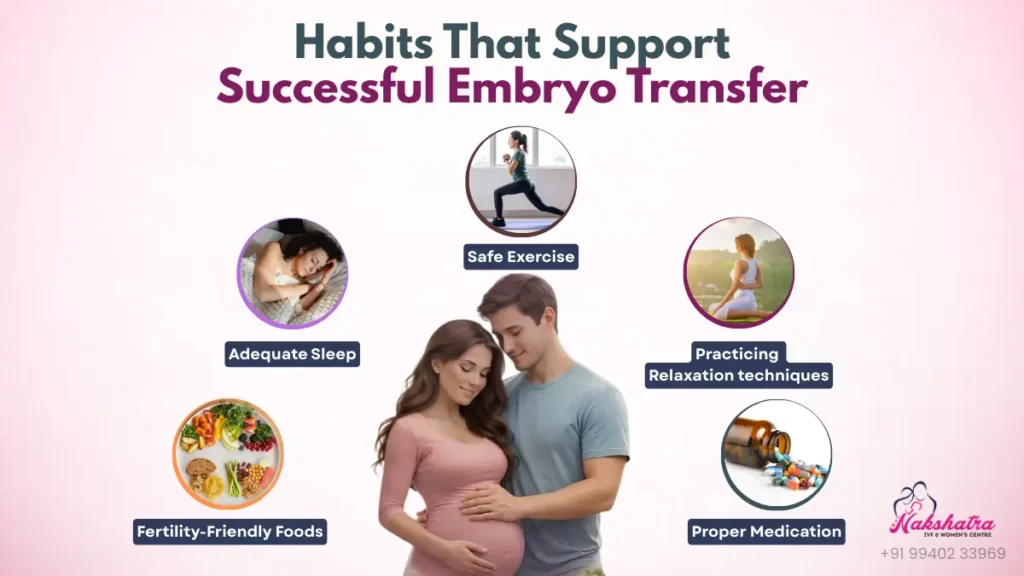
- Consuming fertility-friendly foods that are rich in fiber, protein, healthy fats, and micronutrients is essential. Maintaining optimal blood sugars and a healthy gut microbiome is recommended.
- Choosing healthy foods also aids in maintaining the hormone levels (estrogen and progesterone) that play pivotal roles in fertility treatment.
- Staying well hydrated.
- Getting adequate sleep helps in enhancing immune function, reducing stress, and regulating hormones.
- A safe exercise routine can be practised if advised by your doctor.
- Practicing relaxation techniques such as breath work, yoga, meditation, journaling, and doing activities that one enjoys.
Follow Medical Advice
The journey of In Vitro Fertilisation (IVF) can be tricky and may take a toll on one’s emotional well-being. But understanding the do’s and don’ts in every step of the process makes the journey easy and safe. The medical recommendations may differ for each individual depending on several factors. Hence, it is crucial to have an open communication with your fertility specialist and understand the treatment process.
Embryo transfer is the final step of the IVF journey that has its own guidelines to be followed. Your fertility doctor knows you best, and it is highly advisable to seek their advice on having sex before embryo transfer.