
Women Fertility Women Health
Understanding Recurrent Miscarriage: Expert Care in Chennai
Overview
Recurrent miscarriages can be a complex and challenging condition that affects the couple physically and emotionally. Most women from Tamil Nadu families are hesitant to open up about miscarriages. However, two or more pregnancy losses require thorough investigation and proper care. Knowing the symptoms, root cause, and treatment options can help prevent such difficulties for the couple. It will also help the fertility care team provide timely, effective support.
What is Recurrent Miscarriage?
Recurrent pregnancy loss or recurrent miscarriage is three or more consecutive failed clinical pregnancies (confirmed through tests) before 20 weeks of pregnancy. In Tamil, it is referred to as தொடர்ச்சியான கருச்சிதைவு, and it occurs in about 1-2% of women. The common reasons for miscarriage may include uterine defects, infections, endocrine disorders, maternal age, previous history of miscarriage, and more. The causes and treatments will be discussed in detail in this space.
What is the Difference between Miscarriage and Recurrent Miscarriage?
The frequency of miscarriage is what sets the two apart. Miscarriage refers to a sudden loss of pregnancy before 24 weeks of pregnancy. Whereas recurrent miscarriage refers to when it occurs three or more times. Both these types can be emotionally draining to couples and their families. It is crucial to undergo a full examination to identify the cause of miscarriage and get proper care. Hence, talking to a fertility expert when you have experienced miscarriage is very important.
How Common is Recurrent Pregnancy Loss in India?
A study published in The Journal of Obstetrics & Gynecology of India investigated the prevalence of recurrent miscarriage among Indian women. About 753 women participated in the study, of which 7.46% (56 women) had experienced recurrent pregnancy loss. The common risk factors for miscarriage were clotting disorders, infections, genetic disorders, and immunological factors.
Did You Know? Or Fertility Facts
Here’s some happy news for you. According to the Royal College of Obstetricians & Gynecologists, when the cause of recurrent miscarriage is unexplained or not yet identified, the chances of having a successful pregnancy in the future are likely to be good. Which means, there is a 65% chance of live birth or a successful pregnancy journey even after two miscarriages.
Common Causes of Recurrent Miscarriage
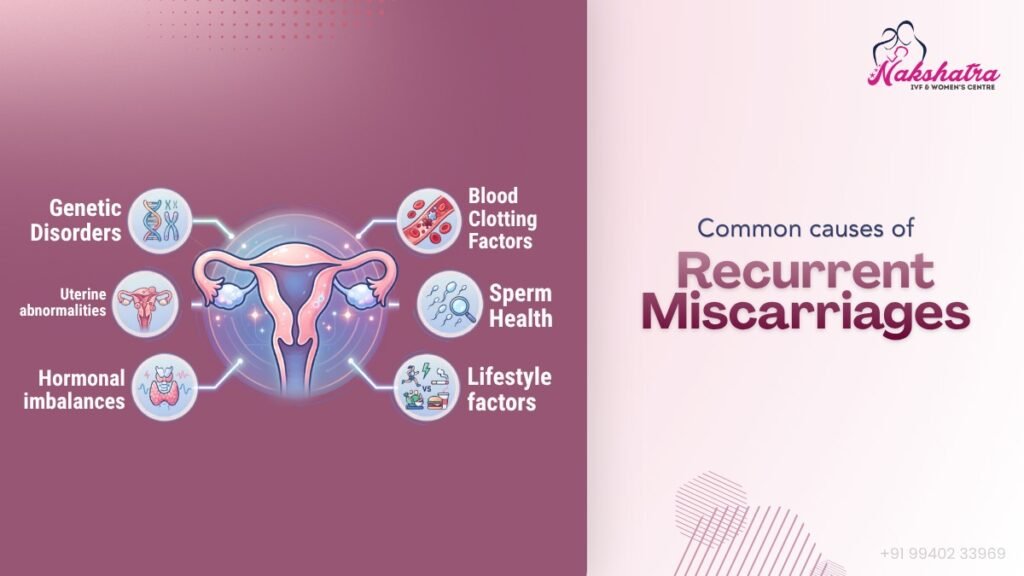
The reasons for recurrent miscarriage may be due to several factors. Most times, the cause of miscarriage remains unknown or not obvious. But when the cause of miscarriage is identified, your fertility specialist will help you with the right treatment plan. Let’s understand the possible causes of recurrent miscarriage, which are discussed below.
Genetic disorders
About 50% of miscarriages are known to happen due to abnormal chromosomes, which is more common among couples with advanced maternal age. In such cases, one of the parents may have chromosomes arranged abnormally. One possible cause is a balanced translocation- the rearrangement of chromosomes that is harmless to the parent but produces abnormal embryos resulting in miscarriage. Hence, when more than two miscarriages occur, the couple should undergo chromosome testing and get treated accordingly.
Uterine abnormalities
According to studies, about 5 to 6 out of 100 women are born with uterine abnormalities (medically called uterine anomaly). Changes in the shape of the uterus have also shown to result in miscarriages among some women. Some of the most common uterine abnormalities that may be a cause of recurrent miscarriage include:
- Septate uterus – A uterus that is divided by a wall of tissue.
- Bicornuate uterus- A uterus divided at the top, giving it a heart shape
- Fibroids- muscle growth in the uterus
- Adhesions or scarred tissues in the uterus
- T-shaped uterus
Hormonal imbalances
Endocrine disorders caused by hormonal problems can lead to recurrent miscarriages.
- Thyroid disorders like high TSH or thyroid antibodies
- Diabetes
- PCOS, a highly risky factor for miscarriage. This could be due to increased insulin and testosterone levels.
- Prolactin imbalance
Blood clotting factors
Thrombophilia or inherited blood clotting issues can lead to recurrent pregnancy loss. Conditions like antiphospholipid syndrome (APS) can cause complications in pregnancy such as miscarriages since it increases the risk of blood clotting.
Sperm health
Abnormal DNA in the sperm can also cause miscarriage. It should be understood that recurrent miscarriages are not always related to the mother. In our Tamil families, it is very common for the women to be blamed for miscarriages or other fertility issues.
Lifestyle factors
Living an unhealthy lifestyle such as maternal smoking, alcohol drinking, drug usage, being obese, and increased caffeine intake may cause miscarriage.
When Should You Consult a Fertility Specialist?
When frequent miscarriages happen, it can affect the woman’s physical and emotional health. In general, seeking medical help after two miscarriages is recommended. But sometimes (considering risk factors like the mother’s age or health conditions), consulting a fertility specialist in Chennai immediately after the first miscarriage is advisable.
Instead of waiting until the third miscarriage to seek medical help, diagnosing the cause earlier can be useful. This can greatly help avoid emotional and physical distress for the couple. Therefore, timely diagnosis and treatment planning with the help of a fertility expert can significantly reduce the risk of miscarriage in the future and make way for a successful pregnancy.
Risk Factors That Increase the Chances of Recurrent Miscarriage
There are risk factors that may increase the chance of recurrent pregnancy loss. Being aware of one’s health condition, family history, and other potential risk factors can help plan your pregnancy and avoid unfortunate situations like miscarriages. The common risk factors are discussed below.
Mother’s age
The age of either parent or mother’s age alone can be a risk factor for recurrent miscarriage. The risk is known to increase when the mother’s age is more than 35 years or when the parents’ are more than 40 years. The risk associated with the mother’s age given by the Royal College of Obstetricians & Gynecologists is summarized in the table below.
| Mother’s age | Risk of miscarriage |
| Below 35 years | 11-15% |
| 35-39 years | 25% |
| 40-44 years | 51% |
| Above 45 years | 93% |
Chromosomal abnormalities
Chromosomal or genetic abnormalities either in the parent (balanced or unbalanced translocation) or the embryo can result in recurrent miscarriages. According to the American Society for Reproductive Medicine, about 50% to 60% of first trimester miscarriages occur due to chromosomal abnormalities in the embryo (medically called embryonic aneuploidy).
Family history
A history of genetic disorders or miscarriages in close family members is known to increase the risk for the individual. Research studies have found that women who had a miscarriage were more likely to report a family history of miscarriage.
Lifestyle
Following an unhealthy lifestyle can be a major risk factor for miscarriage. Stress by itself can be a potential risk factor for recurrent miscarriage. Hence, mental wellness also plays an important part during pregnancy.
Environmental factors
Exposure to some chemicals, X-rays, and drugs can be dangerous when pregnant. Studies on how exposure to anesthetic gases affects theatre workers showed mixed results. However, it is important to be cautious and safe when pregnant.
What are the signs or symptoms of miscarriage?
The main symptom is the loss of pregnancy that may be experienced as vaginal bleeding, lower abdominal cramping, pelvic pain, lower back pain, and tissue or blood clots being discharged through the vagina. These warning signs should not be ignored, and medical help should be received immediately.
💡 Fertility Fact:
What are the signs or symptoms of miscarriage?
The main symptom is the loss of pregnancy that may be experienced as vaginal bleeding, lower abdominal cramping, pelvic pain, lower back pain, and tissue or blood clots being discharged through the vagina. These warning signs should not be ignored, and medical help should be received immediately.
Diagnostic Tests Advised for Recurrent Miscarriage
If you are wondering about knowing the cause of recurrent miscarriage, your fertility expert will suggest a few clinical diagnostic tests or examinations. These tests will help identify the reason for miscarriage and develop an effective treatment plan for a healthy pregnancy in the future. Some of the common tests that may be performed are
- Blood tests (thyroid function, prolactin levels, autoimmune markers, PCOS-related hormone tests, and diabetes screening)
- Genetic tests (parental karyotyping)
- Ultrasound scan of uterus
- Hysteroscopy or HSG for uterine evaluation
- Physical examination of the pelvic region
What are the Treatment Options for Recurrent Miscarriage?
The examination and treatment for recurrent pregnancy loss should be done in a trusted fertility care centre. The treatment largely depends on the cause of miscarriage. But unfortunately, in 75% of the cases, the cause remains unknown.
The treatment should actually be started before getting pregnant. Counselling should be provided to the couple to avoid anxiety and stress, which is more common among women with a history of miscarriages.
- Genetic counselling: When genetic factors are the reason for recurrent miscarriage, your fertility specialist may suggest other advanced fertility treatments such as IVF treatment.
- Surgery: For women with uterine septum, fibroids, or damaged or torn cervix, surgery can be beneficial in treating recurrent miscarriage. However, the benefits and risks involved with the surgery should be discussed with your doctor.
- Treating specific conditions: For thrombophilia (blood clotting condition), anticoagulants like heparin may be suggested. If the cause of miscarriage is autoimmune conditions like antiphospholipid syndrome (APS), aspirin and heparin may be advised by your doctor to avoid clots.
- Hormonal treatment: For women with thyroid disorders or uncontrolled diabetes, hormone therapy will aim to restore hormonal balance.
- PCOS management: PCOS should be managed appropriately by treating the symptoms. Either medicines or surgery will be suggested to achieve regular ovulation. For some women, ART (assisted reproductive technology) treatments will be suggested to avoid further miscarriages.
- Lifestyle changes: Avoiding alcohol, smoking, and high caffeine intake is advisable. Psychological assistance to manage stress and mental health is also necessary.
How to Prepare for a Healthy Pregnancy After Recurrent Miscarriage?
Notes for a Successful Pregnancy After Recurrent Miscarriage
If you have already experienced a miscarriage, it is very important to be cautious and take proper care. Investigate the main cause of miscarriage and get the right treatment planned for future pregnancy. Following a nutritious diet, maintaining a healthy weight, and managing stress are important to prevent complications in the next pregnancy.
Conclusion
Recurrent miscarriage or pregnancy loss can be a challenging experience for the couple, their families, and doctors. Being aware of one’s personal health conditions, family history, and risk factors before planning a pregnancy can help reduce complications. Seeking timely treatment that targets the root cause of miscarriage may increase the chances of a healthy and successful pregnancy.
Your IVF Journey is just a consultation away
Our experienced and highly trusted IVF specialists will provide expert guidance, compassionate care, and personalised treatment plans that will support your fertility journey.