Women Fertility
Egg Rupture with hCG Injections: Symptoms, Timing, and Role in IVF
Introduction
Fertility treatment requires getting a clear understanding of the timeline and physical cues of the menstrual cycle in order to maximise the fertility success rate. The ovulation phase is an important part of a woman’s menstrual cycle. Many couples in Chennai begin tracking ovulation only after facing delays in conception. Understanding the ovulation cycle early can help improve pregnancy planning and fertility treatment outcomes. Ovulation typically occurs 14 days after menstruation and lasts for about 12 to 24 hours. During fertility treatments like IVF and IUI, an hCG (human Chorionic Gonadotropin) injection is used to stimulate the maturation and release of eggs.
What is Egg Rupture and hCG Injections
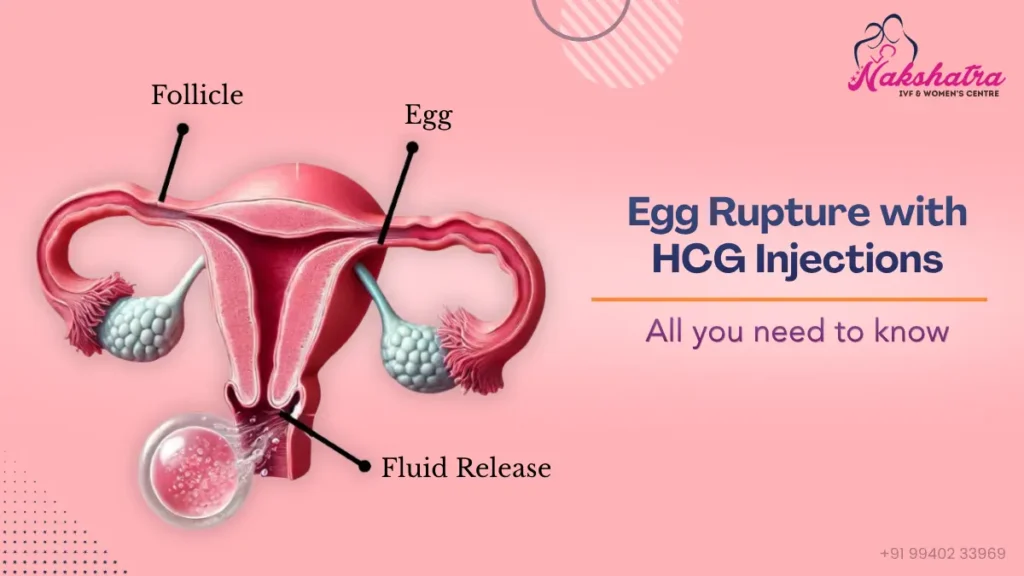
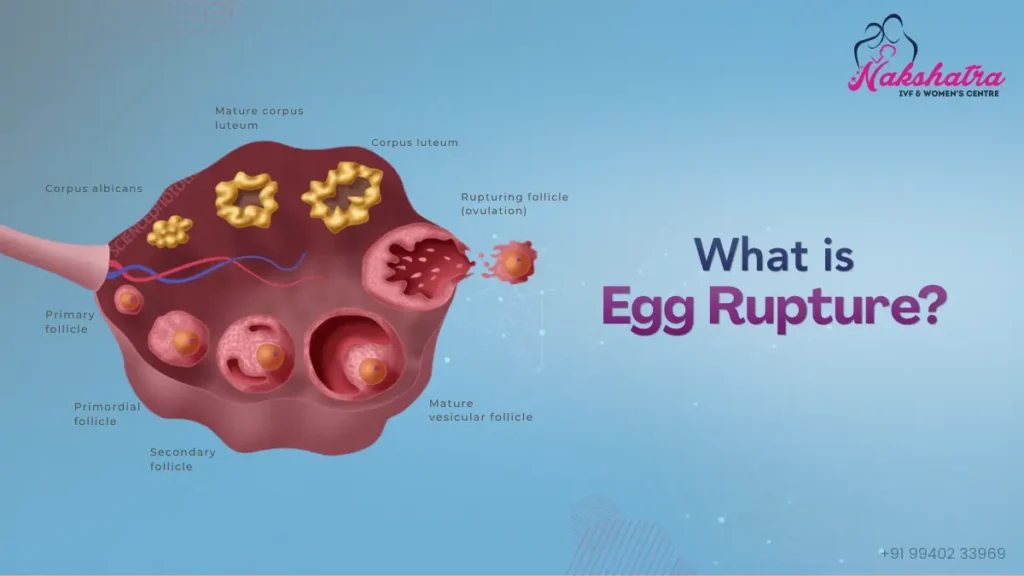
Egg rupture or ovulation is the release of a mature egg from the ovary into the fallopian tube, where fertilisation may occur. In ART (Assisted Reproductive Technologies) procedures, hCG injections are used to trigger the process of ovulation. This drug acts similarly to the luteinising hormone (LH), the one that induces the release of an egg from the mature follicle. The ovulation that occurs after the injection creates a significant time period for IVF (In Vitro Fertilisation) egg retrieval, IUI (Intrauterine insemination), or timely sexual intercourse.
Meaning of Egg Rupture or Ovulation in Tamil
Egg rupture enbadhu tamil-il ‘karumuttai udaidhal’ aladhu ‘karumuttai velipaadu’ endru azhaikapadugiradhu. Idhi pengalin maadhavidai-yin podhu nadakum oru mukiya pagudhi aagum. Muttai paiyil irundhu mudhirchi adaindha muttai veliyeri, karutharithalukaaga kaathirupadhaye ‘egg rupture’ aladhu ‘ovulation’ endru aangilathil azhaika padugiradhu. Karutharipu sigichaigalil karumuttaiyay sariyaga veliyetra hCG ena padum hormone oosigal seluthapadum.
The Role of hCG Injections in Ovulation
The hCG or human Chorionic Gonadotropin injections are also called the ‘trigger shots’. They are known to echo the natural luteinising hormone (the hormone that regulates the process of ovulation). They are administered when undergoing fertility treatments like IVF and IUI to induce ovulation. The hormone injection is known to trigger the follicle to rupture and release a mature egg.
Timing the ovulation process plays a significant role in framing the timeline for treatment procedures like egg retrieval in IVF and IUI. Administering the hCG hormone injection supports timely ovulation and maximises the chances of pregnancy.
Understanding the Process of Ovulation
In our Tamil Nadu culture, menstruation has been treated as a private or taboo topic for discussion. But awareness and open discussion about the menstrual cycle and reproductive health are crucial when planning to start one’s own family. Let us understand how ovulation occurs and what are the egg rupture symptoms commonly experienced. Ovulation typically occurs 14 days (for a 28-day cycle) after menstruation; however, it may vary for each individual. The following are the steps that occur during ovulation.
- There are two ovaries in every woman and multiple follicles in each ovary. The follicles grow an egg every month. Around the 14th day of the menstrual cycle, only one follicle would have grown a fully mature egg.
- A hormonal change occurs on the 14th day, where the luteinising hormone spikes, causing the ovary to release the mature egg. This process is medically called egg rupture or ovulation.
- The egg is now released into the fallopian tube, creating a possible conception window.
- After the release of the egg, the empty follicle changes into a structure called the corpus luteum and secretes an important reproductive hormone called progesterone. This hormone prepares the uterus lining to facilitate pregnancy when fertilisation occurs.
What are the Symptoms of Ovulation?
There are some signs and symptoms of ovulation experienced by some but not all women. The symptoms experienced may vary from individual to individual. Seeking guidance from our trusted female fertility experts can provide more clarity on this.
Discussed below are the common egg rupture symptoms reported by most women
Pelvic or abdominal pain (Mittelschmerz):
A mild pain or cramping may be experienced on one side of the abdomen for a few hours, indicating the release of an egg from the ovary.
Spotting:
Some women may experience light bleeding during ovulation.
Changes in appetite:
The hormonal changes can lead to changes in appetite and increased hunger.
Mucus discharge:
A noticeable egg rupture symptom is the mucus discharge. A stretchy, thin discharge that is similar to raw egg whites may be observed during ovulation. The discharge supports the movement of sperm towards the egg.
Mood swings:
The hormonal shifts can trigger anxiety, irritability, and emotional sensitivity.
Tender breasts:
The changes in hormones during the menstrual cycle cause the breasts to become tender and sensitive for a short period.
Rise in body temperature:
After ovulation, a slight rise in basal body temperature can be used to identify egg rupture.
Greater sexual desire:
Ovulation is the most fertile window of the menstrual cycle, and an increase in sexual desire is a common egg rupture symptom. The enhanced libido also helps increase pregnancy success.
Little Update
Research reveals that the basal body temperature serves as the best indicator of ovulation, while its reliability improves when interpreted along with other symptoms of egg rupture. The cervical mucus was also observed to be linked with overall fertility.
Common Symptoms of Egg Rupture After hCG Injection
After administering the egg rupture injection (hCG injection or the trigger shot), ovulation may occur within 34 to 40 hours. It should be noted that the symptoms of egg rupture after hCG injection may not be experienced by all women but some of the common indicators include
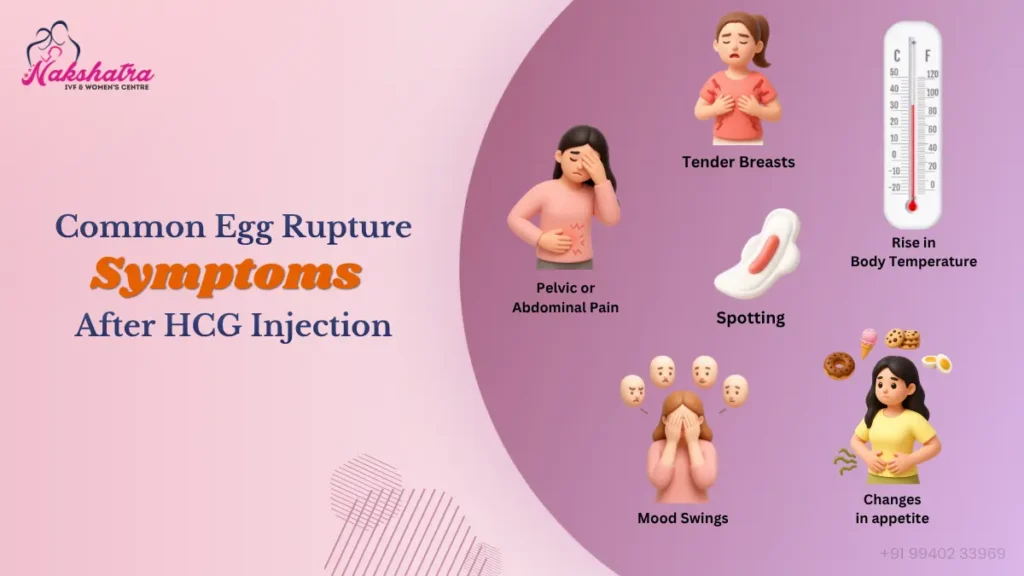
- Light bleeding
- Breast tenderness
- Abdominal bloating
- Nausea
- Mild fatigue or low energy
- Vaginal discharge
- Shift in basal body temperature
- Mood changes
When does Egg Rupture happen after hCG Injection?
The hCG hormone mimics the action of the body’s natural luteinising hormone (LH) and stimulates the follicles to release the mature egg into the fallopian tube. About 34 to 40 hours after the egg rupture injection (hCG) is administered, ovulation happens. The egg is ready for fertilisation from then on. If fertilisation occurs, the embryo travels to the uterus and implants into the uterine lining. During this process, some women may experience symptoms of egg rupture after hCG injection, as discussed earlier.
The egg rupture window is the most fertile period and helps in scheduling the treatment process to maximise effectiveness. After the hCG is injected, fertility experts monitor this critical time period to plan egg retrieval in IVF or the IUI process. It is advisable to consult our leading fertility experts in Chennai to better understand these timings and plan the next steps.
However, the effectiveness and success rate of administering the hCG injection for egg rupture depend on factors like dosage of the hormone, sensitivity and timing of the pregnancy test, potential errors in administration, and individual differences in hCG metabolism.
Little Update
When undergoing fertility treatments like IVF and IUI, understanding and tracking your ovulation cycle plays a meaningful role in timing the treatment process and increasing fertility success.
Ovulation and Pregnancy Success Rate
Irrespective of timing and closely monitoring the ovulation phase, failure for conception may occur. Many Tamil Nadu families still believe that fertility problems occur only in women. The reasons for not getting pregnant after an hCG injection may include
- Quality of the sperm: The count, motility, and overall quality of the sperm play a crucial role in successful pregnancy. Healthy sperm plays a very important role in conception.
- Blockages: When the fallopian tubes are blocked, the mature egg may not be able to travel to the uterus or be fertilised by the sperm.
- Hormonal imbalances: Metabolic disorders like PCOS may impact egg quality and interfere with successful implantation of the egg in the uterus.
- Abnormalities in the uterus: Uterine factors such as the uterine lining and structure are important in pregnancy. Irregular uterine shape, endometriosis, or fibroids may affect conception after ovulation.
- Advanced age: With aging, the quality and quantity of healthy eggs may reduce, thereby increasing the chances of miscarriage and infertility.
- Cancer: Treatments like radiotherapy, chemotherapy, or other medications can affect the chances of pregnancy.
- Stress: As an independent factor, stress can change hormonal stability and affect fertility in men and women.
What is the Next Step if Pregnancy Fails after an hCG Injection?
Consulting a fertility specialist is the first step after administering an hCG injection. When, after several attempts of timed ovulation and intercourse, pregnancy does not occur, a fertility expert should be consulted. They can help identify the underlying reason and guide the couple with proper examination and treatment modifications.
For some couples, fertility experts may suggest ART procedures like IVF or the IUI procedure, depending on the root cause. With these techniques, the chances of successful pregnancy can be increased. It also helps bypass barriers like blocked fallopian tubes or low sperm quality and boosts the success rate of pregnancy. IUI procedure helps overcome fertility issues like low sperm count, motility, or cervical factor infertility. In IUI, sperm is directly placed into the uterus using a catheter to maximise the chance of fertilisation.
How IVF Treatment Helps Solve Pregnancy Challenges?
IVF treatment can be a game-changer when other fertility factors affect conception failure after hCG injection. In IVF treatment, after an hCG injection is administered and ovulation has been successful, the mature egg is retrieved from the woman’s body. The egg is then fertilised with sperm in a controlled laboratory setting. The fertilised eggs (embryos) are closely monitored for a few days and then transferred back into the uterus for implantation. A few tests are performed to confirm pregnancy.
If fertilisation does not occur despite hCG trigger injections and other fertility treatments, IVF may be a suitable treatment option. At Nakshatra Fertility, our experienced IVF specialists in Chennai provide personalised fertility evaluations and evidence-based treatment plans to help couples overcome infertility challenges and move confidently toward their parenthood journey.
Bottom Line
Gaining a clear understanding of reproductive health can be a bonus in fertility treatment. Tracking and understanding the process and symptoms of egg rupture after hCG injection can help achieve successful treatment outcomes.
In certain situations, pregnancy may not occur despite timed ovulation and sexual intercourse. The reasons for not getting pregnant after hCG or the egg rupture injection could be due to different factors and should be addressed immediately with professional support.
Your IVF Journey is just a consultation away
Our experienced and highly trusted IVF specialists will provide expert guidance, compassionate care, and personalised treatment plans that will support your fertility journey.