Men Fertility
Phimosis in Adult Men: Does it Affect Fertility?
What is Phimosis?
Phimosis refers to the inability to retract the foreskin that covers the head or glans of the penis. This condition is commonly seen among infants and young children. In phimosis, the skin appears to be tightly stretched like a rubber band around the head of the penis. Now, the popular question that pops up for everyone is “Does phimosis affect fertility?” “Does phimosis cause infertility?” “Do men with phimosis become infertile?”, and many more.
While the condition may sound like it could affect a man’s fertility, there are many other aspects of this topic to consider. This blog will break down all the facts you should know to find the answers to your questions.
How Common is Phimosis?
Phimosis is a common condition among infants and young children. About 96% of male infants are born with physiological phimosis. But the condition improves naturally with age, mostly between 3 and 7 years. In adults, about 1% of men are diagnosed with phimosis. In adults, it mostly occurs due to infections, scarring, or other medical conditions. When phimosis does not recover or remains problematic, it is essential to seek medical help.
Does Phimosis Affect Male Fertility?
Phimosis is an external condition that affects the foreskin of the penis. Therefore, it does not affect the quality or quantity of the sperm. So to answer the common question, no, phimosis does not directly affect male fertility. It may cause negative effects on the sexual life of men with phimosis. But the good news is that we have Chennai’s experienced specialists who treat phimosis and help men lead a normal sexual life.
Common Myths vs Facts Of Phimosis
When discussing phimosis, a common thought that comes to our minds is Tamil Nadu’s cultural practice of circumcision. The cultural norms are diverse among different communities with different beliefs about phimosis and circumcision. In Chennai, many men are hesitant to discuss phimosis even with their own families due to shyness and stigma. There are also some myths about phimosis, circumcision, and male fertility that need to be clarified before discussing phimosis in detail.
- Myth: Phimosis causes infertility in men
- Fact: Phimosis does not directly cause male infertility, but can cause difficulties in conception when there is pain during intercourse, recurring infections, or difficulty in ejaculation.
- Myth: Phimosis reduces sperm count and affects fertility
- Fact: No, phimosis is a condition affecting the retraction of the foreskin and does not affect the sperm quality or quantity.
- Myth: Pregnancy is impossible for men with phimosis
- Fact: Phimosis is a treatable condition. With treatment, phimosis can be treated, and men can have a normal sexual life and achieve pregnancy.
- Myth: Circumcision is the only treatment for phimosis.
- Fact: There are surgical and non-surgical procedures to treat phimosis. Circumcision is one of the treatment options among others.
- Myth: The foreskin is dirty and should be removed for hygienic purposes.
- Fact: The foreskin acts as a barrier and protects the glans from infections and dirt. It is not necessary that it should be removed to treat phimosis.
- Myth: It is necessary to pull the foreskin back for conceiving
- Fact: While the foreskin doesn’t need to be pulled back, it is easier for the semen to travel into the vagina when it is pulled back.
When to See a Doctor? Symptoms Explained
Here are a few common symptoms that will help you know if you have phimosis.
- Inability to retract the foreskin: The first symptom noticed is the difficulty in pulling back the foreskin over the head or glans of the penis during erections.
- Discomfort: Experiencing pain or other discomfort during urination or sexual activity.
- Swelling of the glans: The foreskin may appear inflamed, swollen, or red in colour, due to an infection or irritation in the skin.
- Ballooning: When urinating, the foreskin may balloon out. The tightened foreskin causes the urine to be trapped, leading to ballooning of the foreskin.
- Cracks: Small tears or cracks in the foreskin occur when it becomes tight, as in phimosis.
The above symptoms will help you know if you have phimosis. However, it is important to consult a male fertility expert or an andrologist to diagnose and treat phimosis. At Nakshatra IVF & Women’s Centre, our andrologists also help in preventing and treating phimosis, and have improved the chances of fertility for several men.
Types of Phimosis
Phimosis can be of two types.
- Physiological phimosis: This is a normal type of tight foreskin that is commonly present in newborns and young boys. This type of infantile phimosis resolves as children grow and the foreskin stretches or loosens and separates from the glans. Physiological phimosis generally resolves by the age of 5 to 7 years. Some communities in Tamil Nadu have a traditional practice of the removal of the foreskin for male infants within a few days of their birth, for religious beliefs.
- Pathological phimosis: The secondary type of phimosis, or pathological phimosis, is a serious condition that can occur in men of any age group. The foreskin becomes abnormally tight and does not retract, causing symptoms like infections, pain, difficulty in sexual activity, and urination. It could be caused by inflammation, infection, forced retraction that results in tears, scarring, bleeding, or other underlying conditions.
Another related condition is Paraphimosis, which occurs when the foreskin gets pulled back but gets stuck. The skin does not come forward again or to its usual position. This leads to swelling, pain, and loss of blood flow to the penis. This is an emergency condition that needs to be addressed on time. Usual treatment includes creating a slit in the foreskin or circumcision.
What Causes Phimosis in Men?
Different factors can lead to a tight foreskin or phimosis. Some of the common causes are discussed below.
- Natural development: For infants, during their development in the uterus, the foreskin might fuse with the penis. This usually resolves when they reach the adolescence stage, where the foreskin loosens and becomes retractable.
- Infections and inflammation: Recurrent infections in the foreskin or glans can result in inflammation, scarring, and tightening of the foreskin. Long-term or chronic inflammation can lead to pathological phimosis, requiring immediate medical attention.
- Injury: Physical injury, trauma, or forced retraction of the foreskin can result in tearing of the skin. During the initial stages of injury, healing may happen naturally; however, the scars may lead to a tight foreskin over time.
- Poor hygiene: Improper or inadequate cleaning of the genital areas can lead to irritation and an increased risk of infections. When poor hygiene is maintained, there is a buildup of smegma- a whitish-yellow substance formed around the genitals due to the accumulation of shed skin cells, oils, moisture, and other body fluids.
- Skin diseases: Some chronic skin conditions, like eczema or lichen sclerosus, can lead to scarring in the foreskin, which may result in a tight foreskin.
- Medical conditions: Some health conditions increase the risk of phimosis. Diabetes, when not treated or poorly managed, can increase the risk of infection and inflammation, which may lead to pathological phimosis.
How Does Phimosis Directly Affect Fertility?
To know if phimosis affects fertility, its direct impact on health and sexual activity should be understood.
- Phimosis can cause difficulties in ejaculation. When the foreskin does not pull back, it may cause pain, and maintaining an erection can be difficult. The tightness of the foreskin may also obstruct the flow of semen into the vagina.
- Phimosis may increase the risk of infections when it is untreated for a prolonged period. Infections can reduce the quality of sperm over time.
- Pain and difficulty in maintaining an erection and ejaculation can reduce sexual interest in men, thereby affecting their sex life.
How Does Phimosis Indirectly Affect Fertility?
Phimosis can indirectly affect fertility in men.
- Experiencing pain during erection or difficulty in ejaculating can psychologically affect men. They may feel embarrassed, and this may reduce their sex drive.
- Increased accumulation of smegma may occur due to phimosis. This can affect the hygiene and cleanliness of the genitals. Improper cleaning can also increase the risk of bacterial infections, which in turn may affect their reproductive health.
- Phimosis can also indirectly increase the risk of STIs (Sexually Transmitted Infections) that may reduce the sperm’s health.
Treatment Options for Phimosis
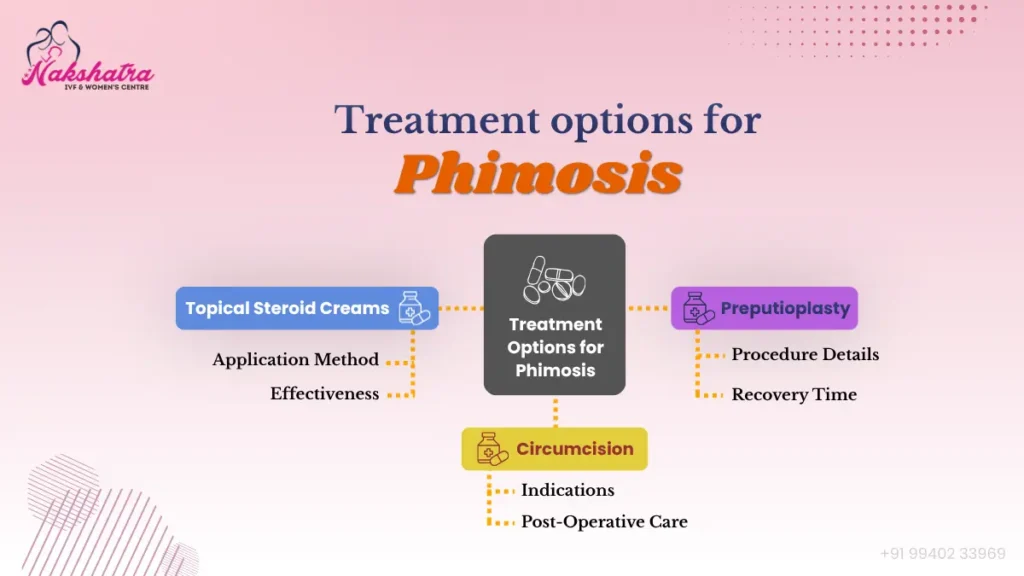
Phimosis is a treatable condition. The treatment depends on the severity of the condition and the underlying cause.
Cultural Impacts vs Modern Medicine
In some communities in Tamil Nadu, especially among Muslim families, circumcision is a ritual tradition practiced. It is often linked to cleanliness or purification, faith, and a sign of belonging. However, some religious traditions in India prefer preserving the creation in the body. The treatment discussion for phimosis requires careful consideration of medical science and cultural beliefs. Modern medicine views this as a balance between medical needs and personal preference. There are treatment options available to treat phimosis without removing the foreskin for individuals who prefer to preserve it.
- Topical creams: The most common first line of treatment for phimosis is a steroid cream. Your fertility expert may advise you to use a steroid cream that helps make the foreskin more elastic and allow for retraction.
- Hygiene practices: Keeping the genital area clean and hygienic can help prevent infections and reduce inflammation in the foreskin. The hot, humid weather in Chennai makes hygiene even more important. Using gentle cleansers with water and cleaning the area helps prevent and treat phimosis.
- Antibiotics: When the underlying cause for phimosis is infections, antibiotics or antifungal medications will be advised to treat the infection and improve symptoms.
- Preputioplasty: This procedure helps preserve the foreskin. This is a less invasive surgical approach where a small cut is made in the foreskin to loosen and relieve the tightness while preserving the foreskin.
- Circumcision: Circumcision is a permanent solution for phimosis, but it is not the first option preferred. When non-surgical methods are unhelpful, surgical removal of the foreskin (circumcision) is advised by your doctor.
Can Phimosis be Prevented?
Is Phimosis a Preventable Condition?
Now that we have covered all the topics regarding phimosis, the one last question many men have is, “Can phimosis be prevented?” While it cannot always be prevented, certain practices help reduce its risk.
Some of the prevention methods are,
- Cleaning and keeping the foreskin and the area around it hygienic. This helps prevent infections and smegma buildup.
- Avoid forced retraction and follow safe sex practices to prevent tears and scarring.
- Use mild soap or cleansers along with lukewarm water to clean.
- Avoid using deodorants, talcum powders, and other cosmetic products in the genitals.
- Monitor and manage skin conditions like eczema with proper medical guidance.
Let’s Talk Openly
Conclusion
Tight foreskin or phimosis can be physically and psychologically stressful for men. Due to the cultural taboos and psychological barriers, most men from Tamil families feel embarrassed to seek help. However, it should be understood that phimosis is completely treatable through both non-surgical and surgical procedures.
As much as people consult a doctor for diabetes or BP, men experiencing symptoms of phimosis should consider consulting a doctor without any embarrassment or shyness. Although it is common to feel worried or shy about discussing phimosis, seeking timely help is crucial.
The men’s health doctor/men’s fertility specialist at Nakshatra Fertility Hospital helps men overcome their fears about their reproductive health with modern and timely treatment. OR
Consulting a men’s health specialist can help you prevent complications and improve your sexual health. Reach out to the male fertility specialists available at Nakshatra Fertility Hospital to get personalised treatment for your reproductive health needs.
Your IVF Journey is just a consultation away
Our experienced and highly trusted IVF specialists will provide expert guidance, compassionate care, and personalised treatment plans that will support your fertility journey.